

Table of Contents
A recent Canada Revenue Agency (CRA) decision is drawing attention across the tax and finance space, not because it introduces a new rule, but because it reinforces an old one more firmly than ever: taxpayers are fully responsible for the accuracy of their returns, even when using automated systems.
This case is a reminder that in today’s tax environment, convenience has increased, but accountability has not changed.
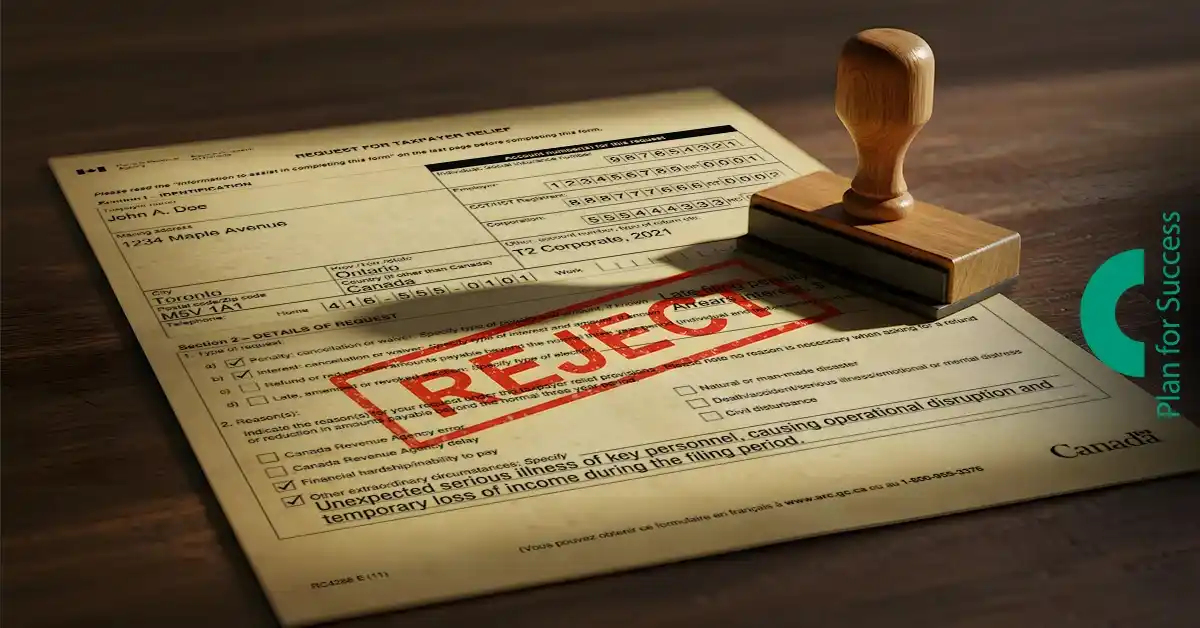
A Taxpayer Relief Request That Was Denied
In one case, the taxpayer had asked for relief from penalties and interest because he had discovered that his filed return failed to include all of the income information. The problem was that T5 slips were not fully reported when they were filed.
The taxpayer, like many Canadians, had been taking advantage of CRA’s auto-fill. Everything looked whole, on the surface, but on re-evaluation, it was found that some income sources had not been considered.
The taxpayer thought that the omission was inadvertent and sought relief under CRA’s taxpayer relief provisions. The request was rejected, and it was upheld by the Federal Court.
The reasoning was straightforward but strict: the responsibility for ensuring completeness lies with the taxpayer, not the system used to file.
Why CRA Rejected the Request
The CRA’s position in cases like this has remained consistent over time, but enforcement is becoming more rigid in practice. Relief provisions are not designed to correct filing mistakes. Rather, they are reserved for exceptional situations where compliance was genuinely impossible.
In this case, the CRA determined that the missing income could have been reasonably identified before filing. Financial slips, banking records, and third-party income sources are all expected to be reviewed by the taxpayer, even if auto-fill tools are used.
The lesson to be learned from the ruling isn’t on automation, it’s on responsibility. The CRA explicitly stated that digital filing tools do not have to take on all tasks without any mistakes. They are not meant to be a complete preparation, but instead, they provide assistance.
The Growing Gap Between Automation and Responsibility
What makes this case particularly relevant in 2026 is how common this situation has become.
More Canadians are now earning income from multiple sources, investment accounts, freelance platforms, rental properties, and digital financial tools. At the same time, tax filing has become increasingly automated, creating a quiet assumption that most of the work is already done.
But that assumption is where problems often begin.
Auto-fill systems only report what has been transmitted to CRA. If a slip is delayed, missing, or incorrectly reported by a financial institution, it may not appear in the return at all. When that happens, the responsibility still falls on the taxpayer to identify and correct the gap before filing.
This disconnect between convenience and completeness is becoming one of the most common causes of reassessments and penalties.
Why Taxpayer Relief Is Becoming Harder to Obtain
While taxpayer relief still exists within the CRA system, its application has become narrower in practice.
Relief is generally intended for situations such as serious illness, natural disasters, CRA processing delays, or circumstances where the taxpayer had no reasonable ability to comply on time.
However, missing income slips or incomplete reporting rarely qualify anymore, especially when the information could have been obtained through standard financial records.
In simple terms, CRA is drawing a clearer line between unavoidable circumstances and preventable errors, and most filing mistakes are now being treated as preventable.
The Financial Risk of Small Filing Errors
The real issue with cases like this is not just the denial of relief, but the financial impact that follows.
Once penalties are applied, they can increase quickly due to interest accumulation. In some cases, additional penalties may apply if the CRA determines that income was repeatedly underreported or missed across multiple years.
What begins as a small oversight can gradually turn into a much larger financial burden, especially when errors are only discovered after reassessment.
This is why accuracy before filing matters more than correction after filing.
What This Means for Taxpayers in 2026
The broader message that is supposed to be received from this step of CRA in this case is quite clear. The CRA is not moving away from automation, but it is also not moving away from accountability.
It is important for taxpayers to independently confirm their income, and not just accept information from the system. Auto-fill features will assist, but don’t replace the review.
At a more practical level, it’s just that the responsibility for accuracy hasn’t changed. It has simply become more crucial to review the output of automation twice.
How Faber LLP Can Help
At Faber LLP, we see situations like this more often than most people realize. In many cases, the issue is incomplete visibility across financial records.
That’s why our process is more than just tax filing. We are not about correcting errors after they’ve become a penalty; we’re about ensuring that there are no errors at all before they get submitted.
Every return is reviewed against all available income sources, including slips, banking records, and investment statements. This helps ensure that nothing is missed simply because it did not appear in auto-fill data.
We also help clients identify potential risks early, before CRA reassessments occur. If something looks inconsistent or incomplete, it is flagged and resolved before filing, not after.
And when corrections are needed, we assist with amendments and structured responses to CRA, ensuring that the process is handled properly and efficiently.